
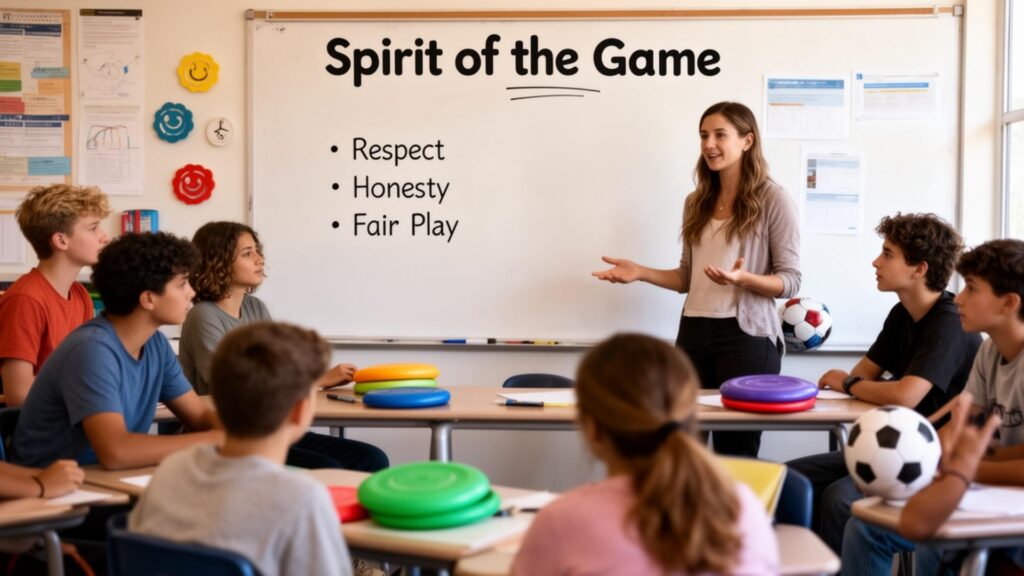
When it comes to character education in physical education, few sports offer the built-in framework that Ultimate Frisbee provides through its Spirit of the Game philosophy. Most team sports rely on referees to enforce rules and maintain fair play, but ultimate frisbee asks players to police themselves. This self-officiated approach sounds idealistic and perhaps unrealistic for adolescents who test boundaries constantly.
The challenge becomes even more pronounced in middle and high school settings, where social pressures and competitive instincts often override good judgment. Students at these ages care deeply about peer perception and winning, which can clash directly with the honest self-assessment that Spirit of the Game requires. Teachers who simply explain the concept and hope students embrace it will face disappointment.
Teaching Spirit of the Game demands intentional strategies that go beyond verbal explanations. You need concrete activities and consistent reinforcement that make these values tangible rather than abstract ideals that students ignore once actual competition begins.
What Spirit of the Game Actually Means
Spirit of the Game centers on the idea that players share responsibility for fair play rather than depending on external authority figures. Each person on the field must know the rules thoroughly and apply them honestly, even when it hurts their team’s chances. This framework assumes that competitive fire and integrity can coexist, which represents a radical departure from the win-at-all-costs mentality that dominates most youth sports.
The official definition from USA Ultimate emphasizes that players should avoid intentional fouls, respect opponents, and resolve disputes through calm discussion. These principles sound wonderful in theory, but require significant maturity to implement during heated game moments. A student who gets beaten on defense must admit the foul rather than staying silent and hoping nobody notices.
The concept extends beyond just calling your own violations. Spirit of the Game asks players to celebrate good plays by opponents and maintain positive attitudes even when losing badly. Students should encourage teammates who make mistakes rather than criticizing errors. The competitive element remains strong, but it never justifies poor behavior or dishonesty about rule infractions.
Looking for a structured way to teach both skills and character in your PE class?
Stop piecing together lessons and hoping they connect. Download our free Middle School Ultimate Frisbee PE Unit Plan a complete, ready-to-use curriculum that builds throwing, catching, game strategy, and Spirit of the Game values into every single session.
Designed specifically for middle school PE teachers who want students to leave class with more than just athletic skills.
Building the Foundation Through Deliberate Practice
1. Start with Clear Expectations
Before students ever play a game, you need to establish what Spirit of the Game looks like in concrete behavioral terms. Abstract concepts like “respect” and “integrity” mean nothing without specific examples. Show video clips of players calling their own fouls even when it costs them important points. Discuss why someone would make that choice and what it reveals about their character.
Create scenarios where students must decide how to handle ambiguous situations. Present a case where two players both think they caught the disc first. Walk through the conversation that should happen, what evidence they should consider, and how to reach resolution without adult intervention. Role-play these interactions so students experience the emotional difficulty of admitting fault.
2. Skill Development Supports Values
Students who lack confidence in their abilities often resort to rule violations out of desperation. They foul because they can’t keep up with faster opponents. They argue calls because they’re embarrassed about mistakes. Teaching throwing and catching to Students who have never played before becomes crucial because competent players feel less threatened and more generous in spirit.
Dedicate significant time to fundamental skills before introducing competitive games. When students can throw accurately and catch consistently, they enjoy the sport more and feel less pressure to cheat. The connection between skill and sportsmanship isn’t obvious at first, but adequate preparation reduces the anxiety that drives poor decisions.
A 2-Week Ultimate Frisbee PE Unit Plan structures this progression thoughtfully. Early lessons focus on individual and partner skills in low-pressure environments. Competitive elements emerge gradually after students have developed baseline competence that lets them focus on values rather than just survival.
Strategies That Work with Adolescents
1. Make Spirit Visible and Measurable
Middle and high school students respond well to concrete recognition systems. Create Spirit of the Game awards that carry as much prestige as athletic achievement. After each game, teams vote on which opponent demonstrated the best spirit through honest calls, positive encouragement, or graceful acceptance of adversity. Display winners prominently just as you would all-star players.
Track spirit metrics alongside athletic performance. How many times did each team stop play to discuss contested calls? How quickly did they reach resolution? Did anyone congratulate an opponent on an excellent play? These observable behaviors give you data to discuss in post-game debriefs and help students see that you value character as much as skill.
Some teachers use point systems where teams can lose spirit points for arguing calls excessively or showing poor sportsmanship. These deductions come from the final score, which means a team could win on the field but lose overall due to spirit violations. This structure sends a powerful message that how you play matters more than whether you win.
2. Peer Accountability Systems
Students often respond better to peer pressure than adult lectures. Form small teams that stay together for multiple games and make them collectively responsible for Spirit of the Game adherence. When one member acts poorly, the entire team faces consequences. This group accountability motivates students to monitor each other’s behavior and speak up when teammates cross lines.
Captain roles should emphasize spirit leadership rather than just athletic ability. Choose students who demonstrate integrity and communication skills to lead teams. These captains model appropriate behavior and facilitate discussions when conflicts arise. Their peers take cues from these leaders more readily than from teacher directions.
Post-game spirit circles create space for honest reflection. Teams gather after matches to discuss specific moments where Spirit of the Game was tested. What situations created tension? How did players handle disagreements? What could improve next time? These structured conversations help students process emotional experiences and learn from challenges while memories remain fresh.
Spirit Activity: The “Contested Call Reflection” Drill
One of the most effective ways to teach Spirit of the Game is to deliberately practice handling disagreements.
How it Works:
• Run a short 5-minute scrimmage.
• When a contested call occurs, immediately pause play.
• Both players calmly explain what they saw.
• Teammates briefly discuss possible resolutions.
• Restart play according to the agreed outcome.
After the drill, gather students and ask:
• What made the disagreement difficult?
• What helped resolve it respectfully?
• How did it feel to admit being wrong (if applicable)?
Practicing these moments intentionally helps students develop emotional control and communication skills before competitive intensity increases.
3. Connect to Real-World Ethics
Teaching the Spirit of the Game becomes more powerful when you link it to situations beyond the playing field. Discuss how self-governance relates to academic integrity when teachers aren’t watching during tests. Explore connections between honest foul calls and ethical business practices where nobody monitors every transaction. These bridges help students see the broader relevance of the values they practice in PE class.
Adolescents are developing their moral identities and testing different ethical frameworks. Use ultimate frisbee as a laboratory where they experiment with different approaches and see consequences in real time. A student who cheats learns that it damages relationships with peers and undermines the game’s enjoyment for everyone. These lessons stick better than abstract moralizing.
Guest speakers who play competitive ultimate can inspire students by sharing how Spirit of the Game functions at high levels. Hearing from college or club players that elite competition still maintains these values challenges the assumption that serious athletes must abandon integrity to succeed. Students need evidence that character and achievement aren’t mutually exclusive.
Handling Challenges and Setbacks
1. When Students Refuse to Self-Officiate
Some students will reject the entire Spirit of the Game concept and demand that you referee like in other sports. They claim it’s unfair that they have to be honest while opponents might cheat. This resistance often comes from students who struggle with the vulnerability that honest self-assessment requires. Acknowledge their concerns without giving in to demands for traditional officiating.
Explain that learning to handle these uncomfortable situations is part of the educational goal. The PE class exists to develop character alongside physical skills. The temporary discomfort of self-governance teaches lessons that matter far beyond sport. Stand firm in your expectations while providing support for students who genuinely try to meet them.
Create modified environments for students who aren’t ready for full self-officiation. Smaller games with more teacher observation can serve as stepping stones. As these students demonstrate improved judgment and honesty, gradually reduce your involvement until they handle situations independently.
2. Cultural Differences and Prior Experiences
Students arrive in your class with vastly different backgrounds regarding sportsmanship and competition. Some come from youth sports cultures where cheating is normalized and winning justifies any tactic. Others have participated in recreational leagues that emphasize participation over competition. How to Teach Ultimate Frisbee in Middle School PE acknowledges these diverse starting points.
You cannot assume all students share the same ethical foundations or even agree that honesty matters in sports. Spend time early in the unit discussing different perspectives on competition and fairness. Let students articulate their views and debate the merits of various approaches. This dialogue surfaces assumptions that would otherwise remain hidden and cause conflicts.
Some students genuinely don’t understand why Spirit of the Game matters when other sports function fine without it. They see self-officiation as inefficient and prone to exploitation. Rather than dismissing these practical concerns, engage them seriously. Discuss the trade-offs between efficiency and character development. Acknowledge that ultimate frisbee makes a different choice about values than mainstream sports.
Assessment Beyond Performance
Traditional PE assessment focuses heavily on athletic performance and participation. You grade students on their throwing accuracy or their ability to score points. Teaching Spirit of the Game requires expanded assessment criteria that capture character development alongside physical skills.
Observe and document specific behaviors that demonstrate spirit values. Note when students call their own fouls, even though no one else saw the violation. Record instances of players encouraging opponents or accepting contested calls gracefully. These observations provide concrete evidence of growth in areas that matter as much as athletic improvement.
Reflection assignments let students articulate their learning about the Spirit of the Game. Have them write about a time when they faced a choice between honesty and advantage. What did they decide and why? How did that decision affect the game and their relationships with other players? These narratives reveal ethical reasoning development that traditional tests cannot measure.
Peer evaluations offer a valuable perspective on spirit development. Teammates and opponents see behaviors that you might miss during games. Ask students to identify classmates who exemplified specific spirit values and explain their reasoning. This feedback helps students understand how others perceive their conduct and reinforces the community aspect of Spirit of the Game.
Long-Term Impact and Broader Applications
The lessons students learn through ultimate frisbee’s self-officiation can transform how they approach challenges throughout their lives. The habit of honest self-assessment becomes valuable in academic settings where opportunities for shortcuts abound. Students who internalize Spirit of the Game principles carry those values into careers where integrity often determines success.
Teaching Spirit of the Game also affects classroom culture beyond PE. Students who learn to resolve conflicts through discussion rather than authority intervention handle disagreements more maturely. They develop communication skills and empathy that improve peer relationships across all school settings. The investment in character development yields returns far beyond the playing field. Check out our guide on Best Team Jerseys for Ultimate Frisbee to find perfect shirts that manage sweat while allowing unrestricted movement during explosive plays.
Best Equipment For Teaching Spirit of the Game to Middle and High School Students
To successfully teach Spirit of the Game, teachers need structured environments where students can focus on communication, honesty, and respectful competition. Clear field boundaries, safe discs, and visible team identifiers reduce confusion and minimize unnecessary disputes. The following equipment helps create that structure so students can focus on character development rather than logistical distractions.
1. Refresh Sports Lightweight Soft Flying Disc
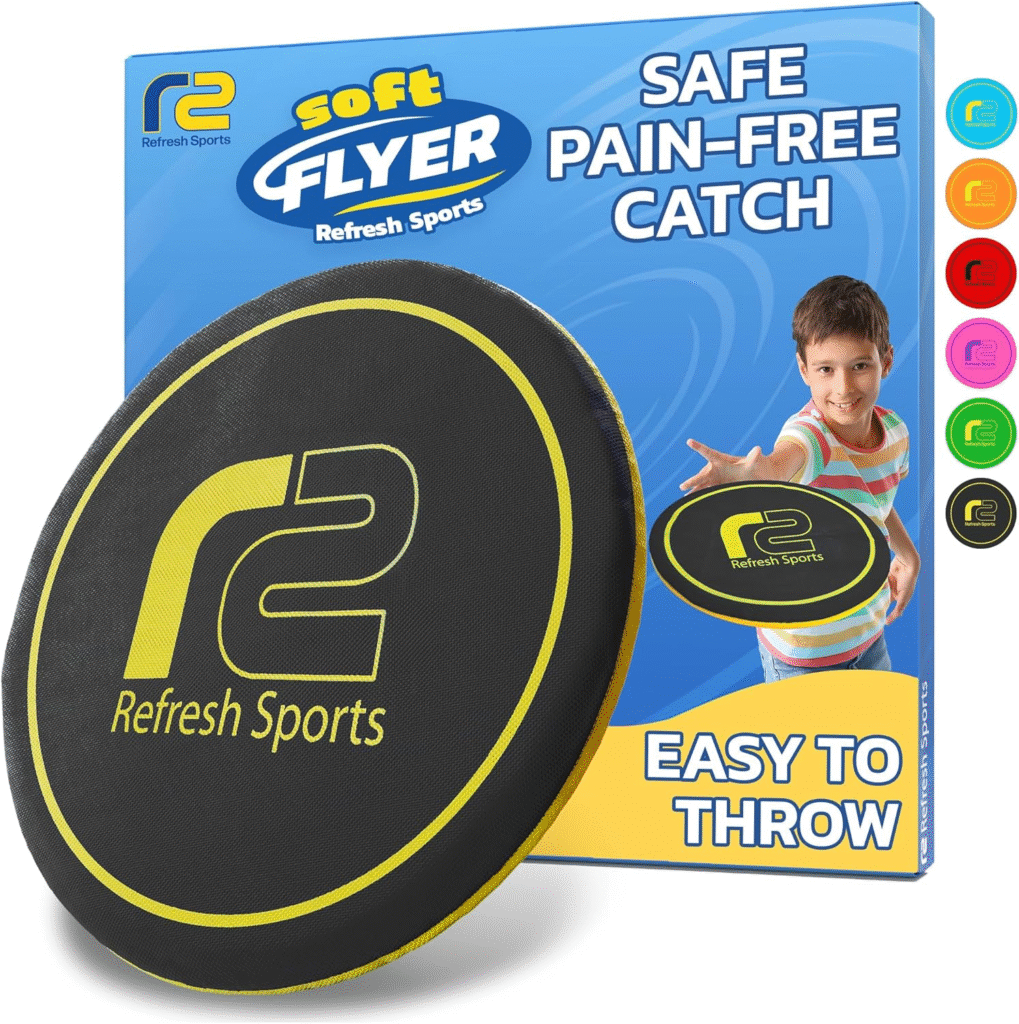
Best for: Character-focused PE lessons where safe, stress-free play is the priority
When the goal of your session is teaching honest communication and self-officiation rather than raw athletic performance, students need a disc that removes every possible reason to feel tense or frustrated. The Refresh Sports Lightweight Soft Flying Disc does exactly that. Its forgiving soft construction means students are not afraid to go after difficult catches, which reduces the defensive anxiety that often triggers disputes, poor sportsmanship, and the kind of competitive desperation that undermines Spirit of the Game before it even gets started.
The disc’s consistent flight path also helps keep the focus on character rather than technical difficulty. When throws behave predictably, contested call situations arise from genuine disagreements rather than unpredictable equipment, which makes them far more productive as teaching moments. For Spirit of the Game sessions where your goal is deliberate practice of honest conflict resolution, this disc gives both teachers and students a reliable, frustration-free foundation to work from.
✔️ Ideal for scrimmages where the focus is character development over competition
✔️ Soft build keeps energy calm and removes fear-driven defensive reactions
✔️ Predictable flight path reduces equipment-related disputes during drills
✔️ Lightweight design allows all skill levels to participate with equal confidence
2. Sunnyglade 4 Pack 15.5-inch Collapsible Traffic Cones
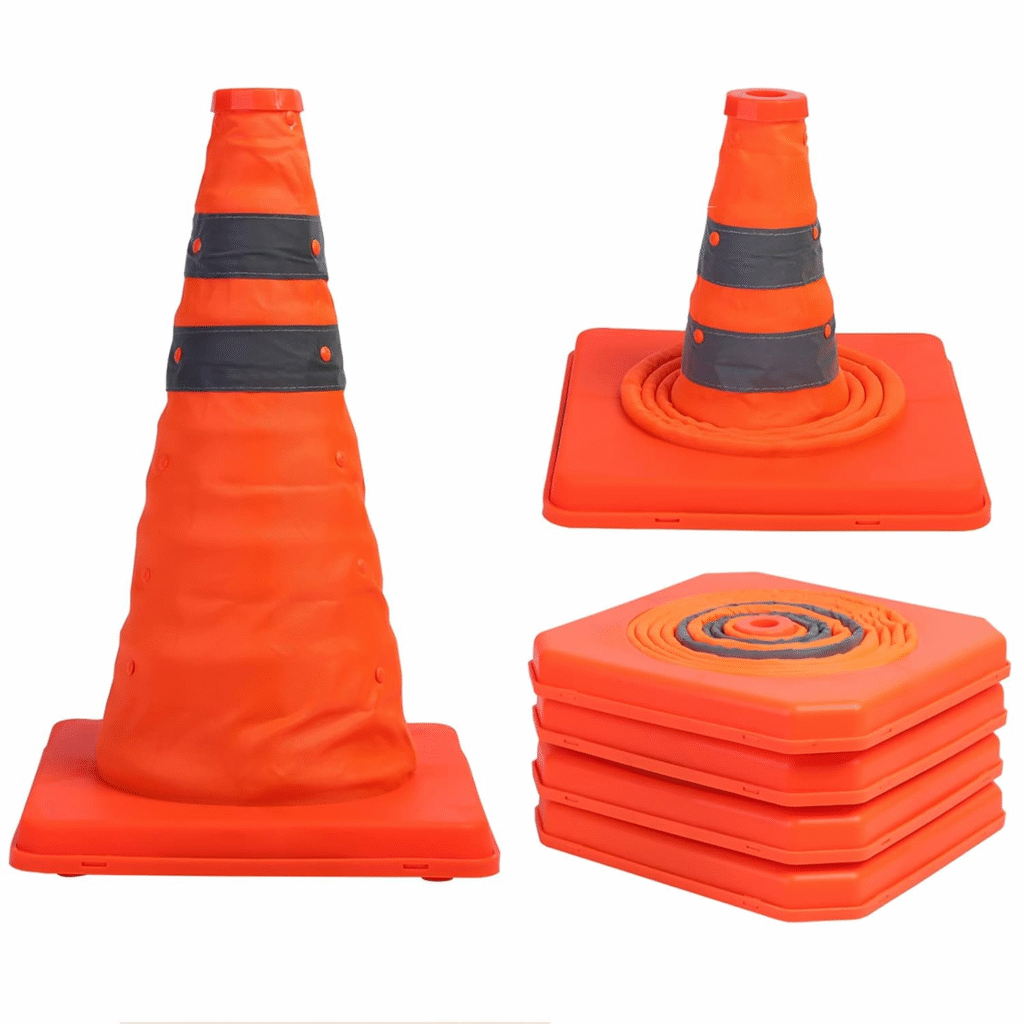
Best for: Structuring clear boundaries that reduce confusion and unnecessary conflicts
Ambiguous boundaries are one of the most common triggers for disputes during self-officiated games, and disputes are exactly what you are trying to channel productively rather than let spiral into frustration. The Sunnyglade Collapsible Traffic Cones give you sharp, unmistakable field boundaries that eliminate the “was that in or out” arguments before they start. When boundaries are visually obvious, the contested calls that do arise tend to be genuine close plays rather than simple misreads of field limits, which makes them far better teaching material for Spirit of the Game conversations.
These cones are also practical enough to support the varied field configurations that character-focused lessons require. Whether you are setting up the small scrimmage zones for the Contested Call Reflection Drill or running multiple simultaneous games for a spirit tournament, these cones go up and come down in under two minutes without disrupting the flow of your session. Their portability and durability make them a dependable part of any PE teacher’s toolkit across an entire school year.
✔️ Ideal for defining multiple small-field scrimmage zones simultaneously
✔️ Clear visual boundaries reduce boundary-related disputes in self-officiated games
✔️ Fast setup and breakdown keep lesson momentum intact between activities
✔️ Durable construction holds up through repeated weekly use outdoors
3. Boyiee Pinnies Scrimmage Vests
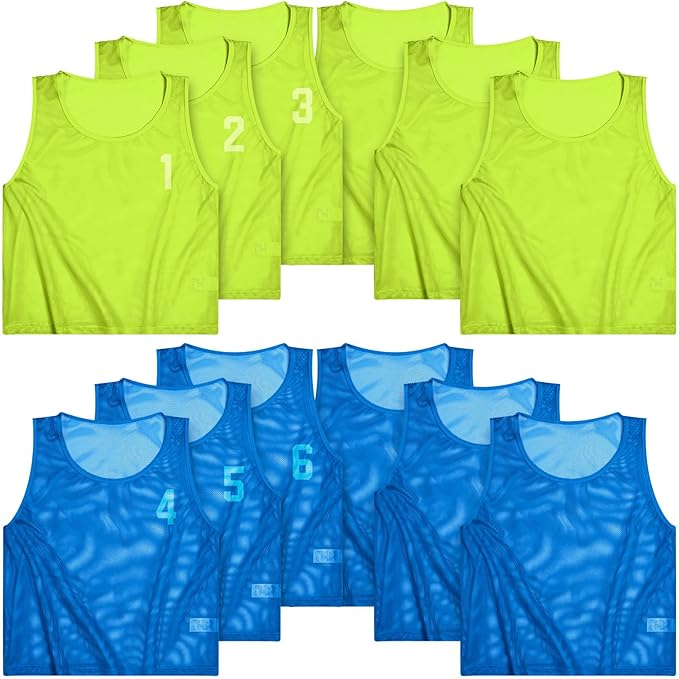
Best for: Organizing team identity during spirit-focused scrimmages and peer accountability drills
One of the core strategies for teaching Spirit of the Game is building collective team accountability, where students feel responsible for each other’s conduct rather than only their own. That peer responsibility system only works cleanly when team membership is immediately obvious to everyone on the field. The Boyiee Pinnies Scrimmage Vests establish that visual clarity instantly, giving each team a distinct identity that supports the group accountability structures that make spirit-based learning effective during live gameplay.
Beyond their functional role, these vests carry a subtle psychological value in a spirit-focused unit. When students wear a shared color, they begin to identify as a unit with a shared reputation, which strengthens the motivation to uphold Spirit of the Game on behalf of the group rather than just themselves. The breathable, adjustable design ensures that comfort never becomes a distraction, and the vests hold their color vibrancy well enough that team distinction stays sharp even across multiple weeks of regular use in an outdoor PE environment.
✔️ Holds color clarity through repeated outdoor use over multi-week units
✔️ Vivid team colors reinforce group identity and collective accountability
✔️ Breathable fabric keeps students focused during high-energy spirit scrimmages
✔️ Adjustable fit accommodates diverse body types across a full class roster
Conclusion – A Few Final Words!
Teaching Spirit of the Game to adolescents challenges traditional approaches to PE instruction but offers rewards that justify the effort. Students need explicit instruction, deliberate practice, and consistent reinforcement to internalize values that feel foreign at first. The process requires patience as learners struggle with the discomfort of honest self-assessment and peer governance.
However, when you commit to these principles and create structures that support character development, students rise to meet high expectations. They discover that competition and integrity can coexist and that personal honor matters more than any single game’s outcome. These lessons about responsibility and ethical conduct will serve them long after they forget specific throwing techniques.
Ready to build character and athletic skills at the same time?
Get your free Middle School PE Unit Plan and bring structure, purpose, and progression to every class you teach. Inside, you’ll find a comprehensive Ultimate Frisbee curriculum built specifically for middle school students. Detailed lesson plans covering throwing, catching, strategy, and Spirit of the Game. Engaging activities that develop teamwork, communication, and physical fitness. And for sure, some practical tips for running scrimmages in a fair, inclusive, and sportsmanship-driven environment.
