
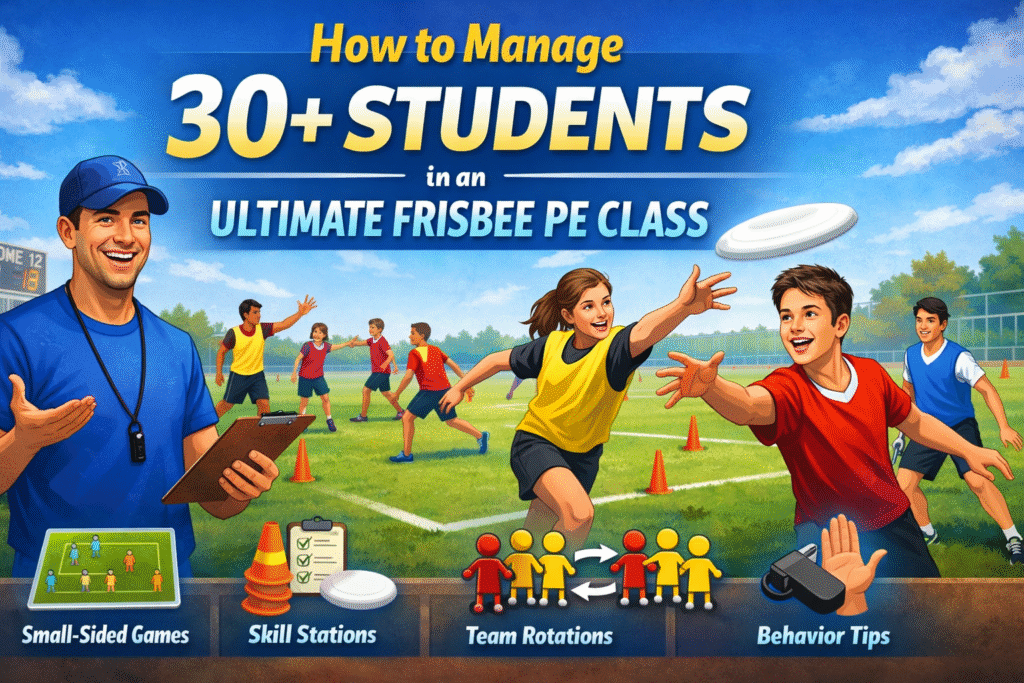
Walking into a gymnasium with thirty or more energetic students while carrying a bag of frisbees can feel overwhelming if you don’t have solid systems in place. The challenge of large PE classes multiplies when you’re teaching a sport that involves flying discs, constant movement, and complex team dynamics all happening simultaneously. Many PE teachers avoid ultimate frisbee entirely because they assume managing that many students with equipment in motion will inevitably lead to chaos.
The reality is quite different when you approach it correctly. Learning how to manage 30+ students in an Ultimate Frisbee PE class comes down to smart organisation rather than wishful thinking about student behaviour. Ultimate Frisbee actually works brilliantly for big class groups because the sport naturally breaks down into smaller units, requires constant movement that keeps students engaged, and includes built in accountability through self officiating.
Start with Clear Structure and Expectations
Establish Simple, Visible Rules
Your first lesson should focus on establishing three to five core rules that students can actually remember. No running with the disc. The disc changes possession when it hits the ground. Score by catching in the end zone. Self officiation means players make calls honestly. Spirit of the game values sportsmanship over winning. That’s it. You can add complexity later, but these basics get students playing quickly while maintaining safety and fairness.
Post these rules visibly on a whiteboard, poster, or laminated cards that stay out throughout the unit. Students will forget verbal explanations within minutes, but a visible reference they can check during games prevents constant questions. The visual reminder also lets you redirect students by pointing to the rule rather than repeating yourself endlessly. This sportsmanship emphasis matters more in ultimate frisbee than in other sports because the entire game depends on players being honest about their own fouls and violations.
Teach Behavior Signals Early
Whistle commands work for auditory control, but you need hand signals for situations where blowing a whistle would unnecessarily interrupt games. A raised fist means hold your position and wait. Hands forming a T shape indicate timeout. Pointing at specific students with a come here gesture means I need to talk to you. Arms crossed overhead signal that class is ending and students should begin cleanup. These visual cues preserve the flow of activities while still giving you management control.
The freeze and reset command deserves special practice during your first class. When you give this signal, every student must stop moving, turn to face you, and stand silently within three seconds. Practice this repeatedly by having students move around freely, then freezing them at random intervals.
This drill feels silly but it establishes your control and creates a tool you’ll use constantly throughout the unit. The ability to instantly capture attention from thirty active students is essential for Ultimate Frisbee PE class management.
If creating this kind of structured session feels time-consuming, having a ready-made framework removes the stress. Feeling overwhelmed planning your PE classes? Stop spending hours creating lessons from scratch.
Download our free Middle School Ultimate Frisbee Lesson Plan and walk into class fully prepared with structured drills, skill progressions, and game-ready activities.
Smart Field Setup for 30+ Students
Divide the Field into Mini Courts
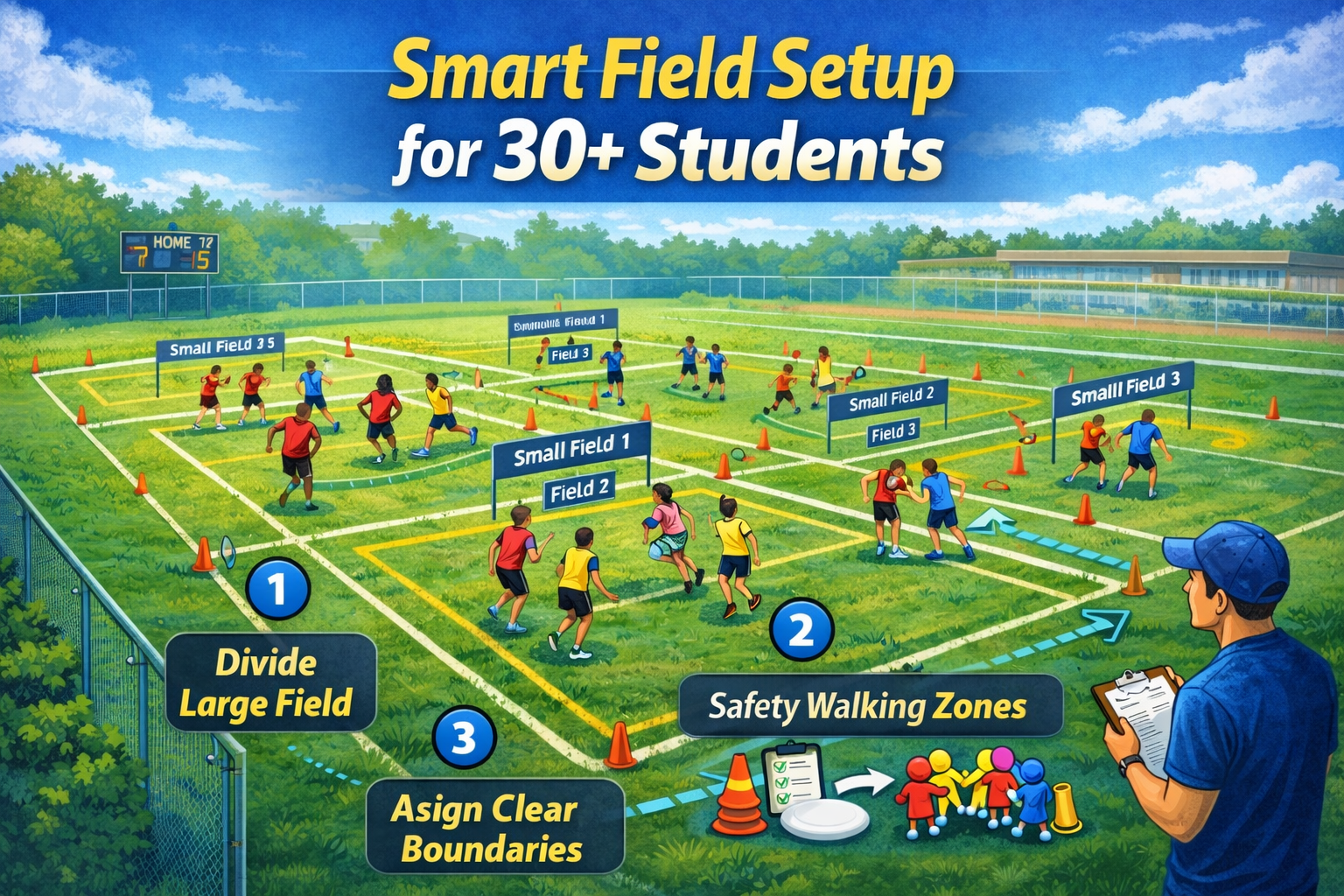
The single biggest mistake teachers make is running one large game with fifteen or more players per side. This guarantees that most students barely touch the disc and spend the class jogging aimlessly around a crowded field. Instead, divide your available space into three or four mini courts running games of four versus four or five versus five simultaneously. This setup increases touches per student dramatically because fewer bodies compete for each disc.
Small sided games prevent overcrowding and the collisions that happen when too many students occupy limited space. The reduced numbers also make individual accountability obvious. Students can’t hide or slack off in a four versus four game the way they can in a fifteen versus fifteen mob. Every player’s contributions matter, which naturally increases engagement and effort.
Define Clear Boundaries and Safety Zones
Use cones strategically to mark boundaries that students can reference easily. Place cones every five to seven metres along sidelines and end lines in alternating colours. This spacing gives students clear reference points when judging whether catches happened in bounds. The colour coding helps distinguish between end zones and sidelines at a glance, reducing disputes and questions.
Create walking lanes between courts where students can move safely without interfering with active games. Mark these neutral zones with different coloured cones and establish that running through these areas is prohibited. This separation prevents students chasing loose discs from colliding with games on adjacent courts.
The defined pathways also give you clear sightlines to observe all courts without constantly repositioning yourself. Strategic field setup makes managing thirty plus students physically possible by creating organised space rather than chaotic scrambles.
Use Skill Stations to Maximize Engagement
Skill stations solve the participation problem by keeping every student active on age appropriate challenges rather than having some students play while others wait. Divide your class into groups of six to eight students and assign each group to a station where they work independently on specific skills.
Throwing Accuracy Station
Set up targets at five, ten, and fifteen metre distances using hula hoops, cones, or marked zones. Students practice backhand and forehand throws, attempting to land their throws inside the targets. Partners retrieve and return discs to keep the station flowing without long walks between throws. This station needs at least two discs per group to eliminate waiting time. Students can self assess by counting successful throws and challenging themselves to improve scores.
Defensive Footwork Station
Students practice defensive positioning without discs, focusing on lateral movement, drop steps, and maintaining good body position. Set up cone courses where students shuffle sideways, practice opening their hips to run, and work on changing directions quickly. Include reaction drills where partners make sudden movements and defenders must respond. This often neglected aspect of ultimate frisbee dramatically improves game performance but rarely gets direct practice time without dedicated stations.
Cutting and Movement Drill
Students work on offensive movement patterns that create separation from defenders. Practice v cuts where students sprint away from the disc handler, plant their foot, and explode back towards the passer. Add give and go patterns where the thrower immediately cuts to a new position after releasing the disc. These fundamental movement patterns transfer directly to games but require focused practice to execute properly.
Mini Scrimmage Area
Create a small court where students play modified three versus three games with specific rules that emphasise concepts you’re teaching. Maybe teams must complete four passes before attempting to score, or every player must touch the disc before a goal counts. These constraint based games develop game awareness while applying skills in realistic situations.
Rotate groups every eight to ten minutes so each group experiences all stations during a single class period. Assign team leaders at each station who keep their group on task and facilitate smooth operation. Quick transitions between stations matter because dead time creates management problems. Have groups rotate clockwise to the next station on your signal, with equipment managers carrying necessary materials to the new location.
Managing Behavior in a Large PE Class
Assign Student Roles
Designating specific responsibilities to students distributes management tasks and creates accountability. Team captains help resolve disputes on their court, ensure their team has the correct number of players, and demonstrate good sportsmanship. Choose captains based on leadership qualities rather than just athletic ability. The responsible student who encourages teammates matters more than the star athlete who dominates play without involving others.
Equipment managers control disc distribution at the start of class and collection at the end. They count equipment to verify nothing is missing and help set up stations or courts. This role suits detail oriented students who take pride in organisation. Having three to four equipment managers ensures tasks get completed quickly.
Positive Reinforcement Systems
Catch students displaying the behaviours you want rather than only addressing problems. Publicly recognise teams that demonstrate excellent sportsmanship, individuals who encourage struggling teammates, and groups that transition quickly between activities. This positive attention shapes behaviour more effectively than constant criticism.
Reward fair play with specific praise that identifies exactly what the student did right. Instead of vague “good job” comments, say something like “team two, I saw you resolve that disputed call through respectful discussion without needing me to intervene, that’s exactly what self officiating means.”
Highlight teamwork publicly by creating a culture where cooperation matters more than individual achievement. When you consistently emphasise inclusion, communication, and mutual support, these values become peer enforced expectations. Students will start holding each other accountable for poor sportsmanship, which reduces your direct intervention needs significantly.
Prevent Downtime
The worst thing you can do when managing large groups in sports is create situations where students stand idle waiting for turns. Every student should be moving and engaged constantly. If you scan the gym and see students standing still for more than thirty seconds, something is wrong with your lesson design.
Avoid full field fifteen versus fifteen chaos that leaves most students uninvolved. The small sided games and station rotations described earlier eliminate downtime by keeping everyone active.
Keep Energy High with Small-Sided Games
Small sided games in PE increase skill development more than full field games because students make more decisions, execute more throws, and experience more game situations per minute of play. A student might touch the disc three times during a ten minute full field game but touch it fifteen times during the same period in a four versus four game. This repetition accelerates learning while keeping engagement high.
Faster decision making in small sided formats teaches game awareness that transfers to larger game situations. Students learn to read defences, recognise when teammates are open, and make quick passing choices under pressure. These cognitive skills develop poorly in crowded games where students have too much time to think and too many options to consider.
Equipment and Safety Management
Control disc distribution by having designated equipment managers hand out discs only when you give explicit permission.
Don’t dump a bag of discs and let students grab them freely. This creates chaos with discs flying everywhere before you’re ready.
Limit the number of discs per group to exactly what they need for their current activity. Extra discs become toys that distract from actual learning.
Sample 60-Minute Ultimate Frisbee Lesson Plan
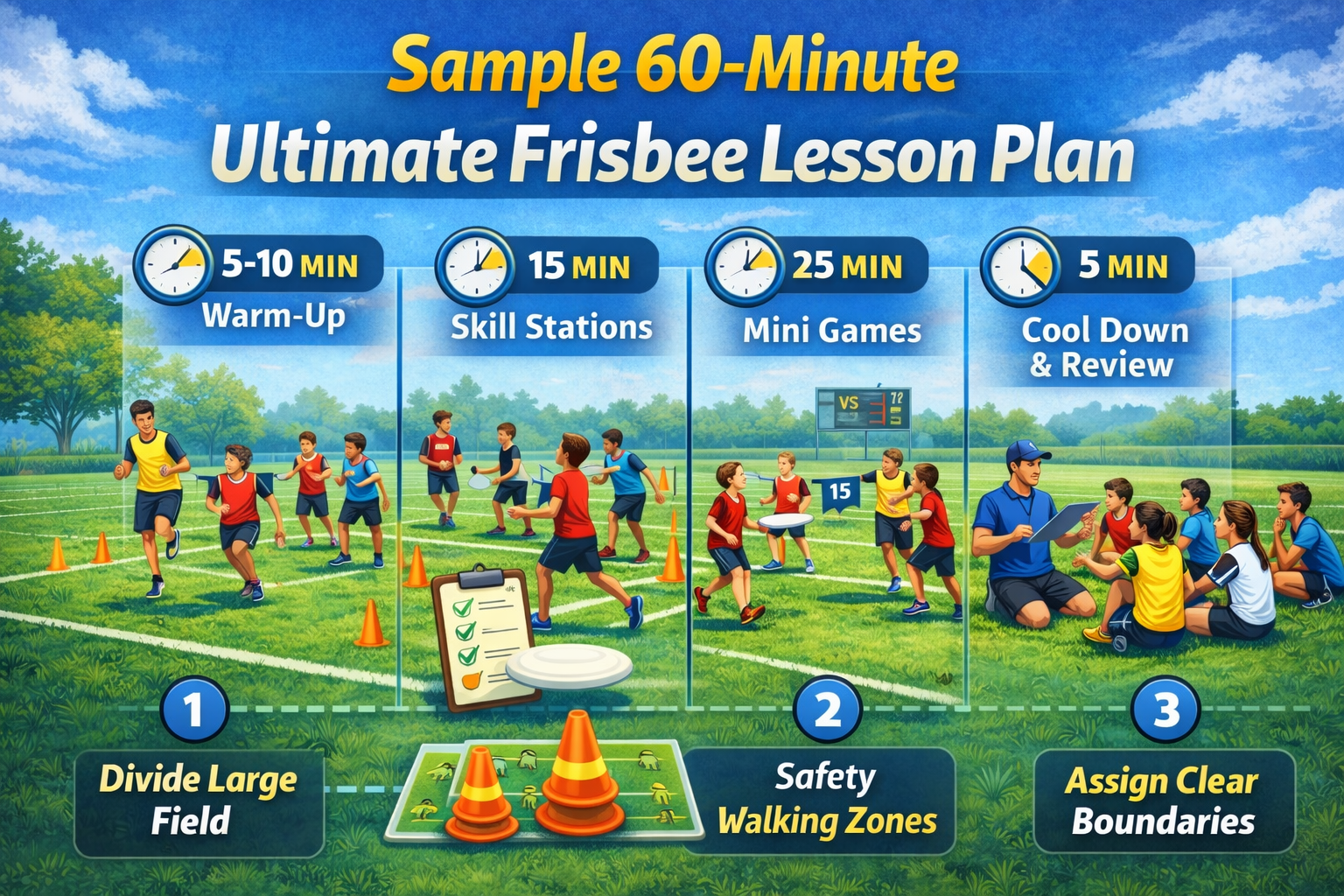
A well structured lesson maximises active learning time while maintaining the control needed to manage 30+ students in an Ultimate Frisbee PE class.
Begin with a five to ten minute dynamic warm up that includes throwing and catching to prepare bodies and review skills. Partner throws at increasing distances work well, as does a quick game of keep away in groups of four.
Transition into fifteen minutes of skill stations where groups rotate through focused practice on specific techniques. This structure ensures every student gets meaningful repetitions rather than standing in long lines. The variety also accommodates different learning styles and skill levels simultaneously.
Move into twenty minutes of small sided games on your multiple mini courts with four versus four or five versus five formats. Use timed rotations so games cycle every seven minutes, creating fresh matchups and maintaining high energy. This is where students apply skills learned during stations in competitive situations.
Spend ten minutes on tournament rotation if you’re running a longer unit where standings and rankings add motivation. This competitive element engages students who might not care about skill development but respond to structured competition. The tournament format also teaches students about brackets, scheduling, and managing competitive situations respectfully.
Recommended Equipment for Large Ultimate Frisbee PE Classes
Having reliable equipment that stands up to the demands of large classes makes the difference between smooth lessons and constant interruptions for broken or lost gear. When you’re managing multiple courts and station rotations, equipment needs to perform consistently across different student skill levels and weather conditions.
Durable School Grade Discs
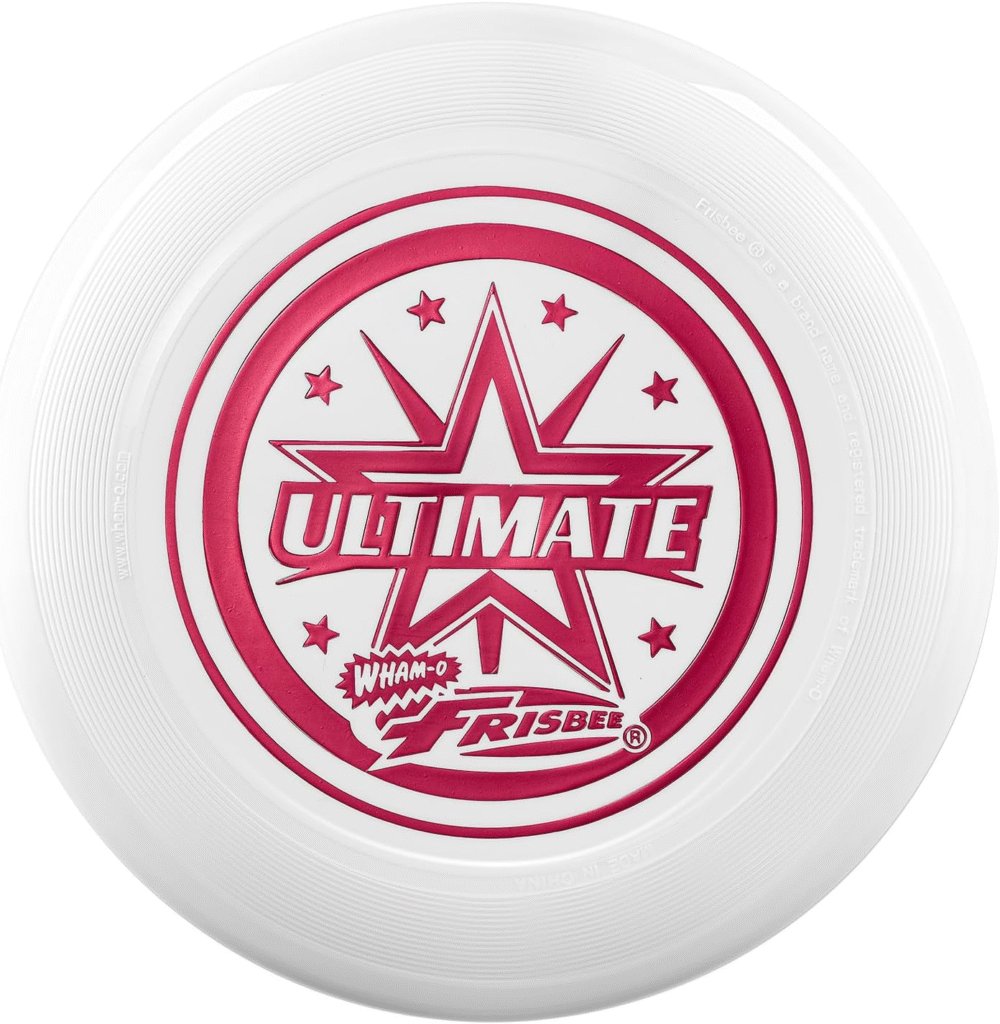
Best for: High-volume PE classes with 30+ students and multiple simultaneous games
The Innova Pulsar Ultimate Disc is built specifically for educational environments where discs take serious abuse from beginners learning proper technique. It’s especially useful for large PE classes where you need multiple discs running simultaneously across different courts and skill stations.
Why It Stands Out:
✔️ Reinforced rim construction survives drops on concrete and rough handling by inexperienced throwers
✔️ Consistent 175g weight across all discs ensures students experience uniform flight patterns
✔️ High-visibility color options help teachers track multiple discs across crowded gyms or outdoor fields
✔️ All-weather performance means lessons proceed consistently regardless of temperature or humidity
Unlike recreational discs that crack after a few weeks of school use, the Pulsar maintains its flight characteristics through entire semesters of daily classes. When you’re running four mini-courts simultaneously with eight discs in play, having equipment that performs identically reduces confusion about whether poor throws result from technique issues or equipment problems.
High Visibility Cones
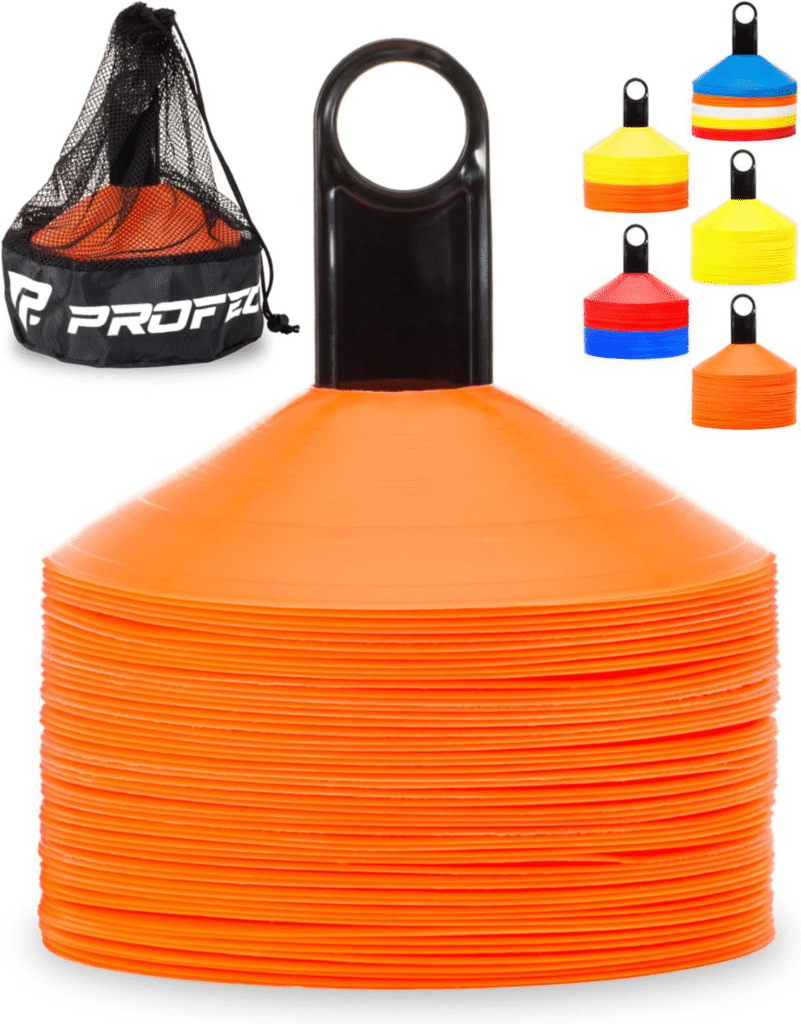
Best for: Teachers setting up multiple courts and rotating station activities
The JOGENMAX Sports Cones (Set of 50) provide the quantity and visibility needed when dividing large spaces into multiple playing areas with clearly defined boundaries. They’re especially valuable for PE teachers who need to quickly transform empty gym space into organised ultimate frisbee courts between class periods.
Why It Stands Out:
✔️ Set of 50 provides enough markers for three complete mini-courts plus dedicated station boundaries
✔️ Bright multi-color assortment allows color-coding different zones (end zones vs sidelines vs safety lanes)
✔️ 9-inch height ensures visibility from across large gymnasium spaces or outdoor fields
✔️ Stackable design with carrying caddy simplifies setup and breakdown between consecutive classes
Unlike standard traffic cones that require separate storage solutions, this set includes organization that matters when you have seven minutes between classes to reset your space. When managing 30+ students across multiple courts, the ability to set up clear boundaries in under three minutes prevents the chaos that comes from ambiguous playing areas.
Portable Pinnies or Bibs
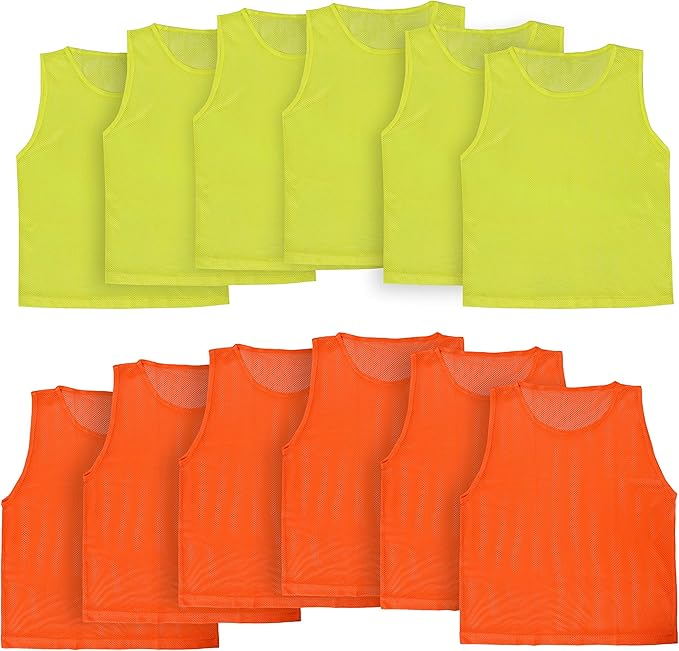
Best for: Quick team identification during rotations and tournament formats
The Workoutz Scrimmage Vests (12-Pack) solve the visual confusion that happens when rotating 30+ students through multiple teams and courts during a single class period. They’re especially practical for managing tournament days where teams play sequential games against different opponents.
Why It Stands Out:
✔️ Pack of 12 in single color means you can outfit two complete teams with two sets (24 total pinnies)
✔️ Lightweight mesh design prevents overheating during intense gameplay in warm gyms
✔️ One-size-fits-most design works across middle school body sizes without adjustment delays
✔️ Machine washable construction withstands weekly cleaning after multiple class periods of use
Unlike pullover jerseys that create bottlenecks during transitions, these vest-style pinnies slip on in seconds when students need to switch teams. When your lesson plan includes rotating students every seven minutes to maintain engagement, the speed of team identification directly impacts how much actual playing time students experience versus standing around waiting.
Final Thoughts on Ultimate Frisbee PE Class Management
Successfully managing large Ultimate Frisbee PE classes comes down to preparation and systems rather than hoping students will simply cooperate. The structure you establish through clear expectations, smart field setup, and organised routines prevents chaos before it starts. Small sided games solve most participation problems by keeping everyone active and accountable rather than creating situations where students can hide or disconnect.
Your confidence in managing 30+ students in an Ultimate Frisbee PE class comes from having tested strategies that address common challenges before they escalate. The techniques described here work because they’re based on how students actually behave rather than idealistic assumptions about perfect classes. Equipment control prevents misuse. Safety zones reduce collisions. Student roles distribute responsibilities. Positive reinforcement shapes behaviour.
Large classes don’t become manageable by chance — they become manageable by design. Sign up using the form below to receive our free 60-minute Ultimate Frisbee PE lesson plans, drill progressions, and classroom-ready resources designed specifically for beginner middle school teachers. These plans are based on real-world coaching experience and structured for immediate classroom use.
