
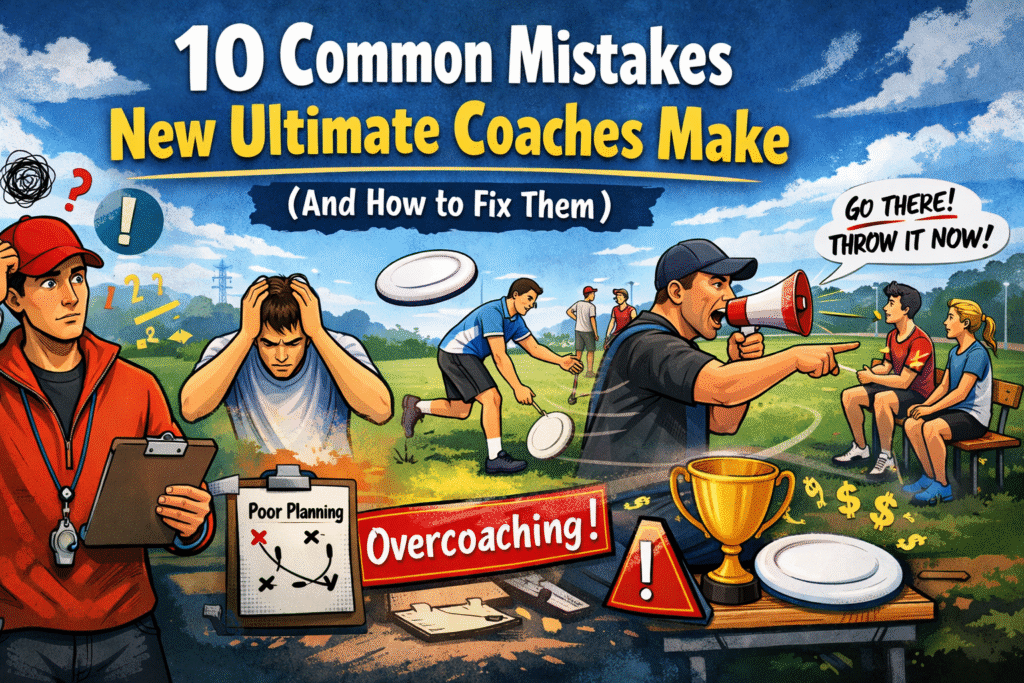
Stepping into coaching for the first time brings excitement mixed with genuine uncertainty about whether you’re doing things right. New ultimate coaches often jump in with enthusiasm but quickly discover that knowing how to play the sport doesn’t automatically translate to knowing how to teach it effectively.
The learning curve is steep, and the mistakes you make during those early seasons can shape your team’s development for better or worse. This guide identifies the ten most common ultimate frisbee coaching mistakes that beginners make and provides concrete solutions you can implement immediately.
Whether you’re coaching a youth rec league or a competitive high school team, understanding these pitfalls helps you avoid wasting practice time and frustrating your players with approaches that simply don’t work.
1. Trying to Teach Everything at Once
Why This Hurts Teams
The temptation to cover every aspect of ultimate frisbee in your first few practices feels almost irresistible. You want your team to understand cutting, stacking, defensive force, throwing mechanics, spirit of the game, and tactical strategy all at once. This information overload absolutely crushes player development because their brains simply can’t process and retain that much new material simultaneously.
Players struggle with retention when concepts pile on top of each other without time for any single skill to solidify through repetition and practice.
This scattershot approach also causes practice to lose structure as you bounce between topics without building anything to completion. Players leave practice confused about what they’re actually supposed to focus on improving. The jack of all trades approach produces teams that are masters of nothing, unable to execute even basic offensive sequences reliably because they never developed solid foundations in any particular area.
How to Fix It
Effective practice planning requires identifying one primary theme per session and building everything around that focus. If throwing mechanics is your theme, your warm up reinforces proper form, your drills isolate specific throws, and your scrimmage time emphasises executing those throws in game situations. This focused repetition allows skills to actually stick rather than evaporating the moment practice ends.
Use logical skill progression that builds complexity gradually rather than jumping to advanced concepts. Ultimate frisbee fundamentals like the backhand throw, basic cuts, and simple defensive positioning must become second nature before you layer on sophisticated offensive systems or defensive schemes.
Each practice should build directly on skills established in previous sessions, creating a curriculum that develops abilities systematically over weeks and months rather than cramming everything into disconnected individual practices.
If you’re teaching this in a PE setting, having a structured session plan makes implementing these mechanics much easier. Feeling overwhelmed planning your PE classes? Stop spending hours creating lessons from scratch.
Download our free Middle School Ultimate Frisbee Lesson Plan and walk into class fully prepared with structured drills, skill progressions, and game-ready activities.
2. Ignoring Fundamentals in Favor of Advanced Plays
The Mistake
New ultimate coaches frequently watch elite college or professional teams and try to copy those offensive systems directly with their own beginners. They draw up complex stack formations, design intricate cutting sequences, and install plays that require precision timing and execution. This jump straight into complex offensive systems before players can reliably complete basic throws or read defensive positioning sets teams up for constant frustration and failure.
The mistake compounds when coaches prioritise looking sophisticated over being effective. They want their team to run the same strategies they see top level teams execute, without recognising that those elite players possess fundamental skills honed over years of focused practice. Copying elite level strategies without the foundational abilities to execute them simply doesn’t work, no matter how good the play design looks on paper.
The Fix
Player development starts with throwing mechanics that allow consistent, accurate passes under pressure. Dedicate significant practice time to proper grip, stance, release points, and follow through for both backhand and forehand throws. Players need hundreds of repetitions to develop muscle memory that holds up during games when defenders are marking them and teammates are cutting into space.
Defensive positioning basics must become automatic before you worry about complex team defensive schemes. Teach players how to position their bodies to force specific throws, how to maintain proper marking distance, and how to track their assignment while maintaining field awareness. These individual defensive skills form the foundation that makes team defensive systems actually functional.
Small sided games provide perfect environments for developing both offensive flow and decision making skills. Three versus three or four versus four games force every player to touch the disc frequently, make reads, and execute under realistic pressure. This format builds game awareness and fundamental competency far more effectively than full field scrimmages where beginners can hide or become spectators to more skilled teammates.
3. Running Unstructured Practices
The Problem
Walking into practice without a clear plan beyond “let’s scrimmage for an hour” represents one of the most common ultimate frisbee coaching mistakes beginners make. When practice lacks a clear objective, time gets wasted on activities that don’t build toward specific improvements.
Players stand around between activities, transitions eat up valuable minutes, and the session ends without anyone feeling like they accomplished something concrete.
Too much scrimmage relative to focused skill work plagues unstructured practices. Scrimmaging feels productive because everyone is active and enjoying themselves, but game play alone doesn’t teach proper technique or tactical understanding. Players simply repeat whatever habits they already have, good or bad, without intervention that corrects errors or refines execution.
Low reps per player in full team scrimmages means most of your roster touches the disc only a handful of times during practice. The players who need the most development get the fewest opportunities because more skilled teammates dominate possession. This uneven distribution of learning opportunities causes skill gaps to widen rather than close over the course of a season.
The Fix
A structured practice framework starts with a dynamic warm up that prepares bodies for activity while incorporating light skill work. This might include throwing on the move, defensive footwork, or cutting drills at low intensity that gradually increase heart rates while reviewing fundamentals.
The drill block forms the core of effective practices, providing focused repetition on specific skills. These ultimate frisbee drills should isolate particular techniques, allow numerous reps for every player, and build in complexity as players demonstrate competency. Structure drills so players spend more time doing than standing in line waiting for turns.
Situation based reps bridge the gap between isolated drills and full scrimmages by creating specific game scenarios to practice. Set up three versus three end zone situations, or practice throwing against the mark under stall pressure. These controlled environments let you stop action to provide feedback and ensure players experience the exact situations you’re trying to prepare them for.
Controlled scrimmage at practice end puts the skills from earlier in practice into game context, but with your ability to stop play when teaching moments arise. This isn’t free play but rather structured game time where you can pause to highlight good decisions, correct errors, and reinforce the practice’s main theme.
4. Over-Coaching During Games
What Happens
Constant sideline shouting from coaches who can’t resist directing every cut, every throw, and every defensive positioning choice turns players into robots waiting for instructions. This barrage of directions during actual competition prevents players from developing their own decision making abilities and game awareness.
Players begin hesitating before making moves because they’re listening for your instruction rather than reading the situation themselves.
When coaches micromanage every moment, player creativity disappears entirely. Ultimate frisbee requires improvisation and adaptation to constantly changing defensive looks and field positions. Players who’ve been trained to follow instructions rather than think independently struggle to handle situations their coach didn’t specifically prepare them for.
The Fix
Effective sideline management means giving simple cues between points rather than play by play commentary. A brief reminder about forcing forehand or encouraging more upfield cutting provides helpful guidance without overloading players with information during the heat of competition.
Trust the habits you trained during practice instead of trying to teach new concepts during games. If you’ve done your preparation work properly, your players know what to do. Games are for execution and experience, not instruction. Your role shifts from teacher to supporter once competition begins.
Focus your coaching mindset on encouragement and strategic adjustments between points rather than trying to control every action. Note what’s working and what isn’t so you can address issues in your next practice. Games provide information about what your team needs to work on, but they’re not the time to actually do that work.
5. Focusing Only on Winning

The Mistake
Prioritising short term victories over long term player development represents a fundamental misunderstanding of what coaching youth ultimate should accomplish. When winning becomes the only measure of success, coaches naturally give their best players the most reps, the most important roles, and the most game time. This approach might produce wins in the immediate season but stunts the development of your entire roster.
Star players dominate reps during practice and games, getting all the learning opportunities and experience while weaker players sit on the sidelines feeling like they don’t matter. This creates resentment, reduces engagement, and ensures your team’s overall skill level remains low because you’re only developing a few athletes.
The Fix
Equal development opportunities don’t mean everyone gets exactly identical playing time, but they do mean your practice design ensures every player gets meaningful reps. Structure drills so weaker players get extra touches rather than fewer. Pair developing players with stronger ones during drills to facilitate learning rather than always grouping by ability level.
Building team chemistry in ultimate frisbee requires valuing every player’s contribution and growth. When your team culture emphasises improvement over rankings, players support each other’s development rather than resenting teammates who get more opportunities.
Long term vision for your programme means accepting that you might not win every game this season if you’re properly developing your full roster. Youth ultimate coaching success should be measured by how many players improve significantly, how many return next season, and how many develop genuine love for the sport rather than just by wins and losses.
Skill building goals provide better motivation than pure competition outcomes. Challenge players to complete ten successful give and go sequences per practice, or to throw five perfect breaks during scrimmages. These measurable objectives tied to actual competency development give everyone something to work toward regardless of game results.
6. Poor Communication With Players
The Problem
Vague instructions like “get open” or “play better defense” don’t actually tell players what to do differently. These generic directions frustrate players because they don’t understand what specific behaviour change you’re asking for. Without clear, actionable language, your coaching has zero impact on actual performance.
No feedback loop means you’re talking at players rather than communicating with them. If you don’t check for understanding or ask players to explain concepts back to you, you have no idea whether your instruction actually registered. Many new ultimate coaches assume that because they said something, players automatically understood and will implement it.
Misaligned expectations between what coaches think they’ve communicated and what players actually understand leads to confusion and underperformance. Players end up getting criticised for not doing things they didn’t know they were supposed to do, creating frustration on both sides.
The Fix
When learning how to coach ultimate frisbee, developing clear communication becomes as important as tactical knowledge. Use specific, concrete language that describes exact actions. Instead of “get open,” say “sprint five yards upfield, plant your foot, and cut back towards the thrower.” This precision leaves no ambiguity about what behaviour you want.
Individual check-ins during water breaks or after practice allow you to gauge understanding and address questions privately. This personal attention helps players feel valued while giving you opportunities to clarify points that weren’t clear during group instruction.
Constructive corrections focus on what to do rather than just what not to do. Pointing out errors without providing alternatives doesn’t help players improve. Frame feedback as “next time, try this” rather than just “that was wrong.” This positive framing keeps players motivated while actually teaching them better techniques.
7. Neglecting Defensive Structure
The Mistake
Many new ultimate coaches spend ninety percent of practice time on offense because it’s more fun and feels more like productive skill development. This creates teams that only practice offense, leaving them vulnerable to any opponent with decent defensive organisation. Without defined defensive identity, your team has no consistent way to generate turnovers or apply pressure to opponents.
The imbalance shows up in games when your offense looks competent but your defense gets shredded by basic offensive principles because players simply don’t know what they’re supposed to do when the other team has possession.
The Fix
Install one base defense that your team can execute reliably before adding variations or alternatives. Whether you choose person to person, zone, or a hybrid approach matters less than having a clear defensive system that everyone understands and can execute. This becomes your team’s defensive identity that opponents must prepare for.
Teaching force fundamentals like forcing forehand or backhand gives your defensive players clear objectives and creates cohesion. When every defender knows the force direction, positioning decisions become simpler and help defense becomes automatic rather than chaotic.
Building defensive habits through dedicated practice time makes defense as automatic as offensive movements. Run defensive positioning drills, practice transition from offense to defense, and scrimmage with defensive objectives rather than just offensive goals. This balanced approach to ultimate team strategy prevents your defense from becoming a liability that undermines whatever your offense accomplishes.
8. Failing to Build Team Culture
The Problem
Assembling talented individuals without creating genuine connection produces teams that underperform their potential. Talent without connection means players don’t support each other, don’t hold themselves accountable, and don’t develop the trust necessary for sophisticated team play. Players show up to practice as individuals rather than as part of something larger than themselves.
No accountability allows poor behaviour, half effort, and negativity to spread without consequences. When coaches fail to establish and enforce standards, teams develop toxic dynamics that poison the entire experience for everyone involved.
The Fix
Define team standards collaboratively with your players rather than imposing rules from above. When the team participates in creating their own code of conduct, they take ownership of those standards and hold each other accountable for meeting them. These standards should cover practice attendance, effort expectations, treatment of teammates and opponents, and spirit of the game values.
Encourage leadership from players rather than trying to control everything yourself. Identify natural leaders on your roster and give them legitimate responsibilities. Captain roles shouldn’t just be honorary titles but actual positions with defined duties that contribute to team function.
Promoting Spirit of the Game as a core value rather than just a rulebook concept builds the foundation for positive team culture. Emphasise that how you compete matters as much as whether you win. This perspective shift helps players understand that ultimate frisbee offers something unique compared to other sports, and that maintaining that uniqueness requires commitment from everyone.
9. Not Adapting to Player Skill Levels
The Mistake
Running the same drills for everyone regardless of ability level frustrates both your strongest and weakest players. Advanced players get bored with drills that don’t challenge them while beginners fall behind when activities exceed their current capabilities. This one size fits all approach to coaching high school ultimate or youth leagues maximises nobody’s development.
When beginners consistently fail at drills designed for more advanced players, they become discouraged and start to believe they’re simply not good at ultimate. This negative self perception becomes a self fulfilling prophecy that limits their willingness to keep trying.
The Fix
Tiered drills within the same activity let players work at appropriate challenge levels. During throwing practice, set up three distance markers so beginners work at five yards, intermediate players at ten yards, and advanced players at fifteen yards. Everyone practices the same skill but at a difficulty that matches their current ability.
Modify reps within drills by adjusting constraints rather than creating entirely different activities. Beginners might complete a cutting drill without a defender, intermediate players add passive defense, and advanced players face active marking. This allows you to run one drill structure while accommodating multiple skill levels simultaneously.
Encourage peer mentoring by pairing stronger players with developing ones during partner drills. This benefits both athletes as the advanced player reinforces their own understanding by teaching while the beginner gets personalised instruction. This approach to skill progression builds team bonds while accelerating development across your entire roster.
10. Not Investing in Your Own Growth
The Mistake
Assuming that playing experience alone qualifies you to coach without any additional learning represents dangerous overconfidence. The skills required for coaching differ significantly from playing skills, and no mentorship or structured learning leaves you repeating the same mistakes season after season without understanding why your teams underperform.
No reflection on what’s working and what isn’t means you never evolve beyond your initial coaching instincts. Without deliberately evaluating your practices and games, you can’t identify patterns in what produces good outcomes versus poor results.
No film review of your team’s games or even of elite teams playing leaves you coaching blind. You miss opportunities to learn from both your team’s actual performance and from how experienced coaches handle similar situations with their teams.
The Fix
This beginner ultimate coach guide emphasises that your education as a coach should be ongoing rather than stopping once you accept the position. Study games by watching film of elite ultimate frisbee teams, noting how they structure offense, rotate defensive matchups, and handle various game situations. This observation provides a library of tactical ideas you can adapt for your team’s level.
Connect with experienced coaches through online forums, local coaching clinics, or by simply reaching out to coaches at other schools or clubs. Most experienced coaches are happy to share advice with new ultimate coaches who demonstrate genuine interest in learning. These relationships provide mentorship that helps you avoid common pitfalls and gives you someone to consult when facing coaching dilemmas.
Evaluate practice effectiveness by tracking whether your session objectives actually materialised in improved performance. Keep a coaching journal where you note what worked, what flopped, and what adjustments you want to try next time. This systematic reflection prevents you from repeating ineffective approaches while reinforcing methods that produce good results.
Recommended Coaching Tools & Training Equipment
Having the right equipment eliminates excuses and ensures your carefully planned practices actually deliver the skill development you’re designing them for. When players work with quality gear that performs predictably, they can focus on technique rather than fighting unreliable equipment.
Ultimate Frisbee Discs
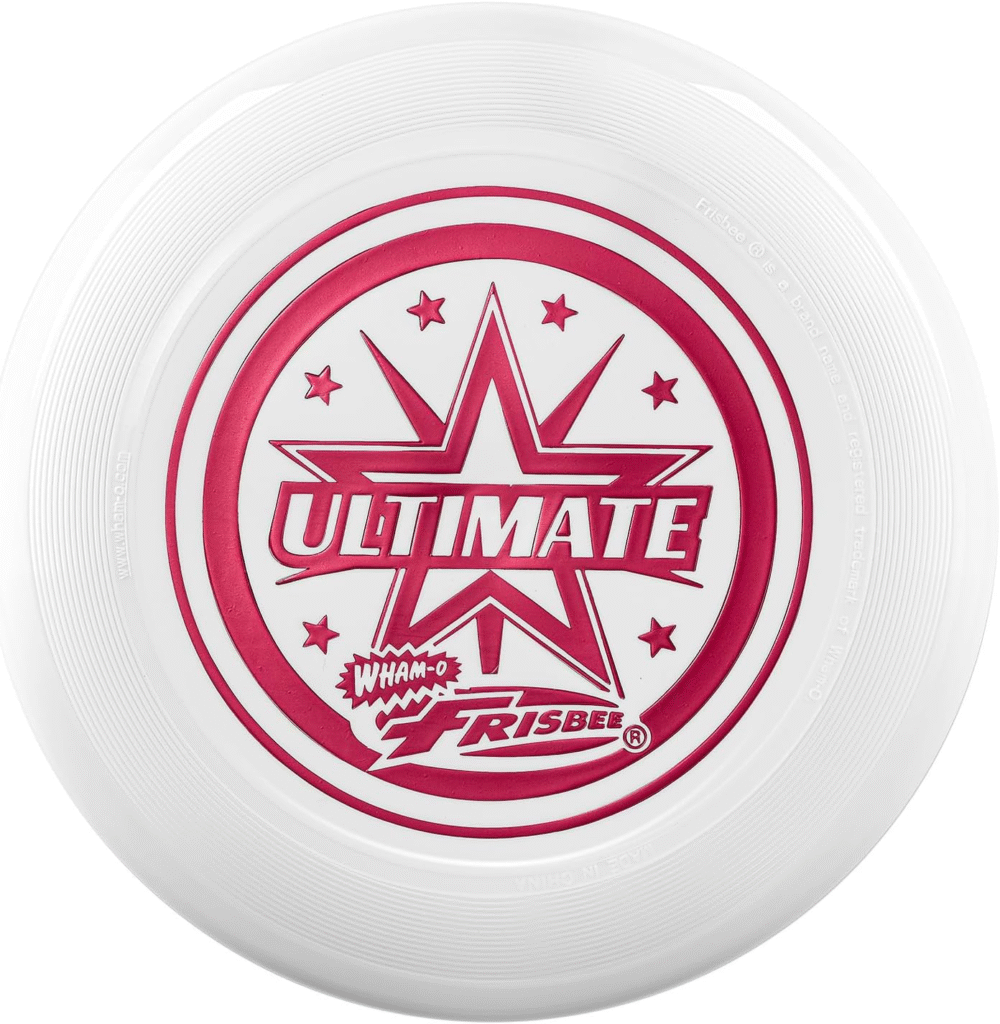
Best for: New coaches building their first practice disc inventory
The Discraft Ultra-Star 175g Flying Disc remains the standard choice for coaches who need discs that perform identically across your entire inventory. It’s especially valuable when teaching throwing mechanics because consistent equipment gives players accurate feedback about whether their technique improvements are working.
Why It Stands Out:
✔️ Official USA Ultimate disc ensures players learn with the same equipment they’ll encounter in competition
✔️ Uniform 175g weight across all discs eliminates variables when teaching proper release and spin
✔️ Championship-grade durability withstands the abuse of beginners learning to throw and catch
✔️ Predictable flight characteristics help coaches diagnose technique issues versus equipment problems
Unlike practice discs that vary in weight and flight pattern, the Ultra-Star removes equipment as a variable in player development. When you’re trying to fix a player’s wobbling release, you need to know the disc will fly straight if they execute correctly. For teams of 20 players, having 5-6 identical Ultra-Stars ensures everyone practices with equipment that behaves the same way.
Best Training Cones
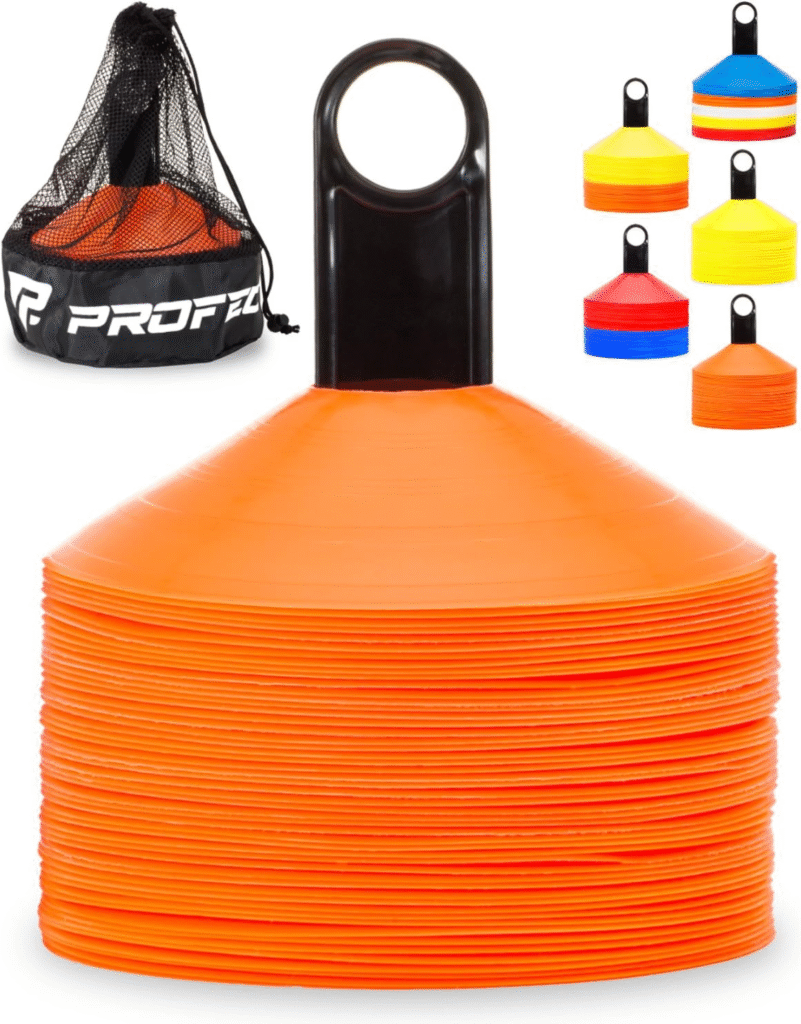
Best for: Coaches running structured drill stations and defining clear practice boundaries
The Crown Sporting Goods Plastic Training Cones (Set of 50) provide the quantity and visibility needed when organizing multi-station practices with specific spatial requirements. They’re particularly useful for new coaches who need to quickly set up multiple drill areas with clear boundaries that players can reference throughout practice.
Why It Stands Out:
✔️ Set of 50 allows simultaneous setup of multiple drill stations plus full field boundary marking
✔️ Bright multi-color variety enables color-coding different zones (offense vs defense areas, target zones)
✔️ 9-inch height provides visibility across full fields without being tall enough to trip players
✔️ Flexible plastic construction bends when stepped on rather than cracking like rigid cones
Unlike basic traffic cones that serve only one purpose, this quantity lets you define throwing accuracy targets, mark cutting lanes, establish defensive positioning zones, and outline scrimmage boundaries all within the same practice. When your practice plan calls for four simultaneous stations plus a scrimmage area, having abundant cones transforms abstract plans into clearly organized physical space.
Agility Ladder
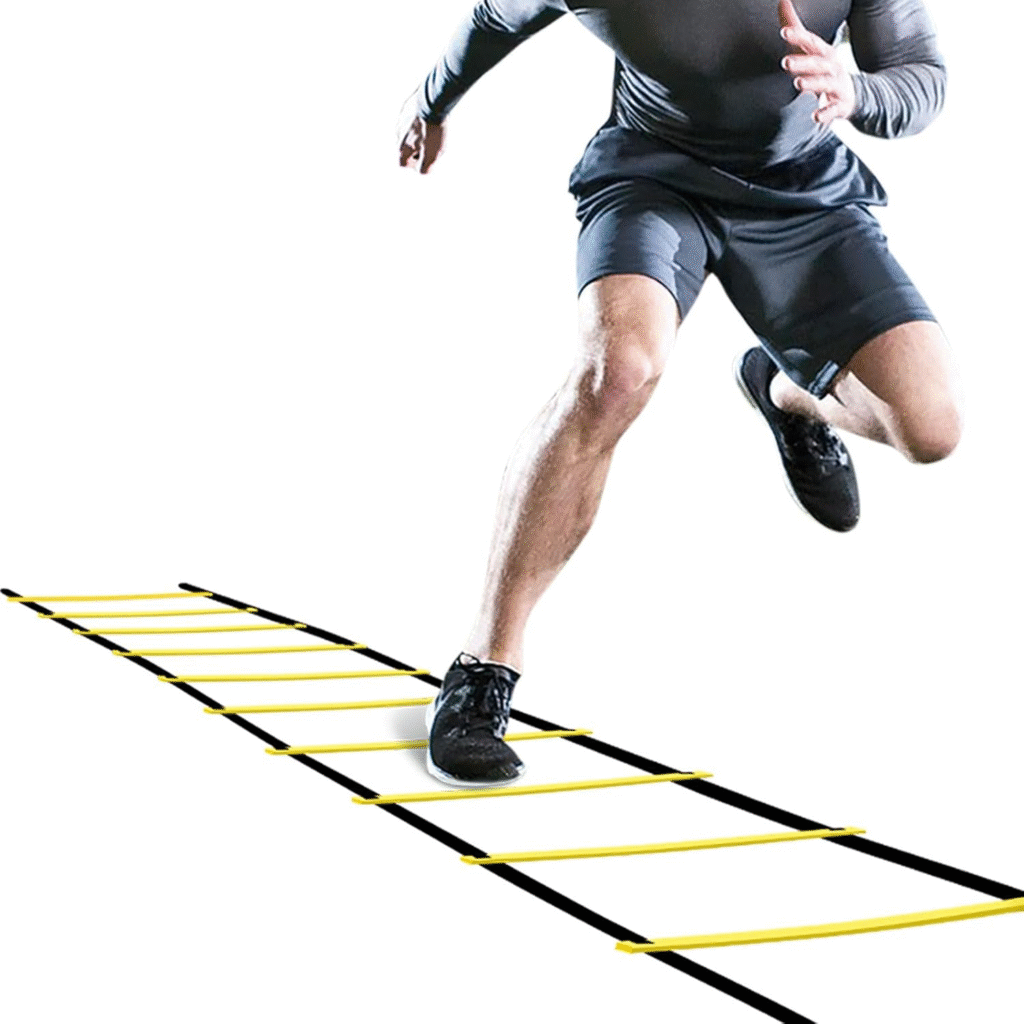
Best for: Coaches prioritizing footwork development and cutting technique
The Yes4All Speed Agility Ladder addresses the footwork deficiencies that limit most beginning players’ cutting effectiveness. It’s especially useful for coaches who recognize that explosive direction changes and quick feet determine cutting success more than pure speed.
Why It Stands Out:
✔️ 12-foot length with adjustable rungs accommodates various footwork drill progressions
✔️ Portable design with carry bag enables quick setup for warm-ups or dedicated footwork stations
✔️ High-visibility yellow color ensures players can see rungs clearly during rapid movement drills
✔️ Durable construction withstands outdoor use on grass, turf, or indoor gym floors
Unlike cone drills that require constant adjustment and setup, the agility ladder provides instant structure for teaching lateral quickness, acceleration patterns, and the precise footwork that creates separation when cutting. When players complain they can’t get open, the issue is usually footwork rather than speed. This tool makes footwork training systematic rather than hoping players figure it out through game experience.
Conclusion
Understanding these common ultimate frisbee coaching mistakes helps new ultimate coaches avoid wasting time on approaches that don’t work. Every experienced coach made many of these errors during their early seasons, so recognising yourself in this list doesn’t mean you’re failing. It means you’re normal and have identified concrete areas for improvement.
The real question is whether you’ll acknowledge these patterns and implement the fixes, or whether you’ll repeat the same mistakes season after season while wondering why your teams don’t develop as you hoped. Coaching ultimate frisbee successfully requires the same dedication to improvement you demand from your players.
Keep learning, keep reflecting, and keep adapting your approach based on what actually produces results rather than what you think should work.
“Most coaching mistakes aren’t permanent — but ignoring them is. The coaches who build strong programs are the ones who adjust early. Sign up using the form below to receive our free 60-minute Ultimate Frisbee PE lesson plans, drill progressions, and classroom-ready resources designed specifically for beginner middle school teachers. These plans are based on real-world coaching experience and structured for immediate classroom use.
